


Originally published in the Hope College Blog by Haley Pangborn.
Dystopian novels are a genre of novels that often deal with some sort of alternate world or future world that resembles our world and society in some way. They tend to discuss themes about government control or manipulation, censorship, or conformity. For some examples of popular dystopias, check out the books listed below!
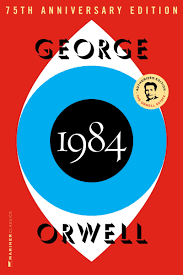
1984 by George Orwell
1984 is one of the classic early dystopian novels. Set in the year 1984 in a totalitarian state, the main character, Winston Smith, works for the governing group, known as The Party. Throughout the novel, Winston begins to experiment and break the rules set by The Party, despite facing a great risk by doing so. Orwell’s novel explores the ideas of complete government control, propaganda, and manipulation of truth.
Fahrenheit 451 by Ray Bradbury
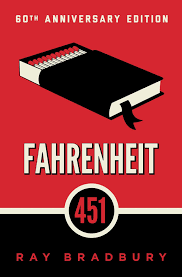
Fahrenheit 451 is another classic dystopian novel. Guy Montag is a fireman, and his job is to burn books. He quickly becomes disillusioned with their society when he meets his new neighbor, Clarisse, whose ideas and free-thinking open Guy’s eyes and lead him to begin to question their society. The Second Red Scare, the McCarthy era, and the book burnings during World War II inspired Ray Bradbury to write this novel. It discusses ideas such as censorship, conformity, and mass media.
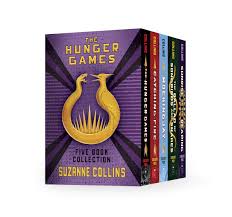
The Hunger Games series by Suzanne Collins
Readers and critics often credit The Hunger Games with starting the Young Adult Dystopian trend of the early 2010s. The series takes place in a post-apocalyptic America now known as Panem. As a punishment for a failed rebellion against the Capitol, each of the 12 Districts in the country must send two tributes, one boy and one girl, to the Hunger Games once a year. The books have themes of survival, oppressive government, and propaganda.
The Handmaid’s Tale by Margaret Atwood

The Handmaid’s Tale takes place in a near-future New England where a radical political group holds a revolution and takes over the American government. Women lose the right to own property, have money, read, write, and lose complete control over their own reproductive rights. The regime forces women to follow strict dress codes that match their rank in society. The novel focuses on topics involving women’s rights, such as gender violence and reproductive rights.
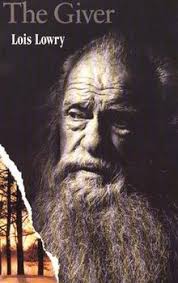
The Giver by Lois Lowery
The Giver takes place in a community where everything appears to be perfect. However, as time goes on, the main character, Jonas, begins to become disillusioned with the apparent perfection of their society. When Jonas turns twelve, the community selects him to be the new Receiver of Memory, granting him exclusive access to memories and knowledge of the past. Lois Lowry’s novel dives into ideas of uniformity, choice, and knowledge.
Dystopian novels not only entertain readers with gripping plots and imaginative settings but also encourage us to reflect on important social and political issues. Whether it’s government control, censorship, or the loss of individual freedoms, these stories offer powerful insights into the world around us. Start with any of these novels if you’re looking for thought-provoking reads that challenge the status quo.
The post Our Favorite Dystopian Novels appeared first on Big Read Lakeshore.
